
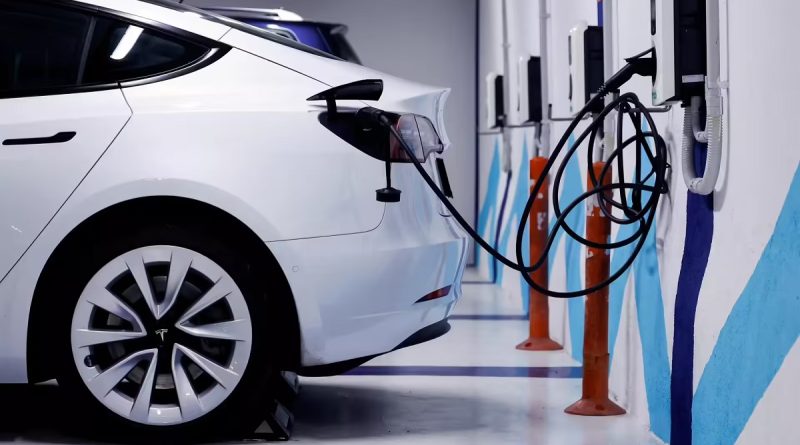
Why Public Charging Stations Are Crucial for EV Adoption in Tier-2 Cities
Tier‑2 cities are emerging as key hubs in the electric vehicle (EV) revolution. To build on this momentum, public electric vehicle charging stations play a pivotal role. This article explains why a strong network of public electric vehicle charging stations in mid‑sized cities is essential for accelerating EV adoption and overcoming key barriers.
- Tier-2 Cities Are the Next Frontier
India’s Tier-2 cities—like Indore, Nagpur, Kochi, and Mysuru—are experiencing a quiet but significant shift. EV registrations are growing. Delivery fleets are electrifying. Consumers are showing interest. But despite this momentum, adoption remains uneven. The primary reason? A lack of reliable public electric vehicle charging stations.
Also, the scale of public electric vehicle charging stations matters: global public charging points doubled since 2022 to over 5 million. To match adoption rates, Tier‑2 cities need to mirror this growth. Every additional public electric vehicle charging stations installation enhances confidence and convenience for new EV buyers.
- Home Charging Isn’t a Scalable Solution
In Tier-1 cities, many EV users install private chargers in gated apartments or office campuses. But in Tier-2 cities, that luxury is rare. A large portion of the population lives in older buildings, rented homes, or mixed-use neighborhoods. For them, public electric vehicle charging stations aren’t just a supplement—they’re a necessity.
Without access to shared infrastructure, EV ownership becomes impractical. By scaling public electric vehicle charging stations across marketplaces, transport hubs, and residential zones, cities can democratize access to clean mobility.
- Public Charging Reduces Range Anxiety
One of the most cited barriers to EV adoption is range anxiety. Consumers hesitate to shift from ICE vehicles if they fear they’ll be stranded without charging options. The presence of well-maintained public electric vehicle charging stations directly counters this fear.
When drivers can confidently find charging stations on public roads, in parking lots, or near retail centers, their willingness to adopt EVs increases. More importantly, frequent visibility of public electric vehicle charging stations builds public trust in the entire ecosystem.
- Economic and Environmental Upside
Tier-2 cities are not just growth markets, they are also pollution hotspots. By deploying public electric vehicle charging stations, city administrations and private players can accelerate the transition to cleaner air and reduce noise noise pollution.
Moreover, these charging stations contribute to local economic activity. Every functional public electric vehicle charging station creates ripple effects: increased foot traffic for nearby vendors, job creation in charger maintenance, and higher EV sales for local dealerships.
5. Encourages Intercity Transport
Public charging hubs ease travel between cities. Placing public electric vehicle charging stations along Tier‑2 and Tier‑3 corridors improves connectivity and encourages intercity EV travel. A well-mapped network of public electric vehicle charging stations makes EVs practical for both local commutes and regional trips.
6. Government Policy Alone Isn’t Enough
Policies like PM e-Drive and state-level EV subsidies are nudging progress. But unless these policies translate into real-world infrastructure—especially public electric vehicle charging stations—they won’t move the needle. Private players, DISCOMs, and municipal corporations must coordinate efforts to deploy public electric vehicle charging stations at speed and scale.
Conclusion
For India’s EV transition to succeed beyond metro cities, the presence of public electric vehicle charging stations in Tier-2 regions is non-negotiable. These stations are more than infrastructure—they are symbols of access, trust, and possibility. Without a dense, reliable network of public electric vehicle charging stations, India risks creating an uneven, urban-skewed EV revolution. With them, we unlock true nationwide change.